
EN বাং
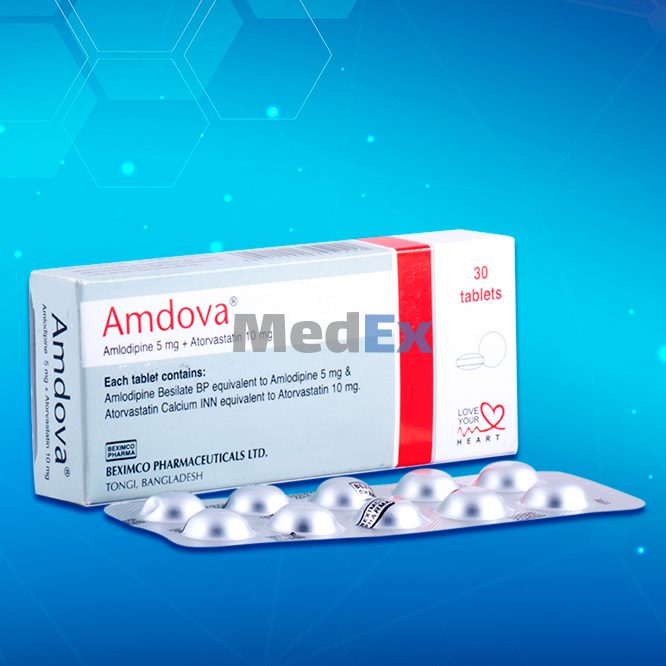
Amdova

Amdova

Tablet

🧬 Amlodipine Besilate + Atorvastatin 🏭 Beximco Pharmaceuticals Ltd.
GENERIC NAME
Amlodipine Besilate + Atorvastatin
MANUFACTURER
Beximco Pharmaceuticals Ltd.
UNIT PRICE
Unit Price: ৳ 11.00 (3 x 10: ৳ 330.00) Strip Price: ৳ 110.00
Indications
Pharmacology
Dosage & Administration
Interaction
Contraindications
Side Effects
Pregnancy & Lactation
Precautions & Warnings
Pediatric Usage
Storage Conditions

Indications

Patients in whom treatment with Amlodipin and Atorvastatin is appropriate at the dose presented, which include hypertension, chronic stable angina, an adjunct to diet for hypercholesterolemia and in hypertensive patients with multiple risk factors for CHD to reduce the risk of nonfatal MI and nonfatal stroke.

Amlodipine:
  • Hypertension: Amlodipine is indicated for the treatment of hypertension. It may be used alone or in combination with other antihypertensive agents;
  • Coronary Artery Disease (CAD): Chronic Stable Angina: Amlodipine is indicated for the treatment of chronic stable angina. Amlodipine may be used alone or in combination with other antianginal or antihypertensive agents; Vasospastic
  • Angina (Prinzmetal's or Variant Angina): Amlodipine is indicated for the treatment of confirmed or suspected vasospastic angina. Amlodipine may be used as monotherapy or in combination with other antianginal drugs.
  • Angiographically Documented CAD: In patients with recently documented CAD by angiography and without heart failure or an ejection fraction <40%, Amlodipine is indicated to reduce the risk of hospitalization due to angina and to reduce the risk of a coronary revascularization procedure.
Atorvastatin: Atorvastatin is indicated as an adjunct to diet to reduce elevated total cholesterol, LDL- cholesterol, apolipoprotein B and triglyceride levels in patients with primary hypercholesterolemia (heterozygous familial and nonfamilial) and mixed dyslipidemia (Fredrickson Types lla and llb), adjunctive therapy to diet for the treatment of patients with elevated serum triglyceride levels (Fredrickson Type IV), for the treatment of patients with primary dysbetalipoproteinemia (Fredrickson Type III) who do not respond adequately to diet, to reduce total-C and LDL-C in patients with homozygous familial hypercholesterolemia as an adjunct to other lipid lowering treatments (e.g. LDL apheresis) or if such treatments are unavailable. At the time of hospitalization for an acute coronary event, consideration can be given to initiating drug therapy at discharge if the LDL-C level is >100 mg/dL (NCEP-ATP III). Prior to initiating therapy with Atorvastatin, secondary causes for hypercholesterolemia (e.g., poorly controlled diabetes mellitus, hypothyroidism, nephrotic syndrome, dysproteinemias, obstructive liver disease, other drug therapy, and alcoholism) should be excluded, and a lipid profile performed to measure total-C, LDL-C, HDL-C, and TG.

Pharmacology

Patients in whom treatment with Amlodipin and Atorvastatin is appropriate at the dose presented, which include hypertension, chronic stable angina, an adjunct to diet for hypercholesterolemia and in hypertensive patients with multiple risk factors for CHD to reduce the risk of nonfatal MI and nonfatal stroke.

Amlodipine:
  • Hypertension: Amlodipine is indicated for the treatment of hypertension. It may be used alone or in combination with other antihypertensive agents;
  • Coronary Artery Disease (CAD): Chronic Stable Angina: Amlodipine is indicated for the treatment of chronic stable angina. Amlodipine may be used alone or in combination with other antianginal or antihypertensive agents; Vasospastic
  • Angina (Prinzmetal's or Variant Angina): Amlodipine is indicated for the treatment of confirmed or suspected vasospastic angina. Amlodipine may be used as monotherapy or in combination with other antianginal drugs.
  • Angiographically Documented CAD: In patients with recently documented CAD by angiography and without heart failure or an ejection fraction <40%, Amlodipine is indicated to reduce the risk of hospitalization due to angina and to reduce the risk of a coronary revascularization procedure.
Atorvastatin: Atorvastatin is indicated as an adjunct to diet to reduce elevated total cholesterol, LDL- cholesterol, apolipoprotein B and triglyceride levels in patients with primary hypercholesterolemia (heterozygous familial and nonfamilial) and mixed dyslipidemia (Fredrickson Types lla and llb), adjunctive therapy to diet for the treatment of patients with elevated serum triglyceride levels (Fredrickson Type IV), for the treatment of patients with primary dysbetalipoproteinemia (Fredrickson Type III) who do not respond adequately to diet, to reduce total-C and LDL-C in patients with homozygous familial hypercholesterolemia as an adjunct to other lipid lowering treatments (e.g. LDL apheresis) or if such treatments are unavailable. At the time of hospitalization for an acute coronary event, consideration can be given to initiating drug therapy at discharge if the LDL-C level is >100 mg/dL (NCEP-ATP III). Prior to initiating therapy with Atorvastatin, secondary causes for hypercholesterolemia (e.g., poorly controlled diabetes mellitus, hypothyroidism, nephrotic syndrome, dysproteinemias, obstructive liver disease, other drug therapy, and alcoholism) should be excluded, and a lipid profile performed to measure total-C, LDL-C, HDL-C, and TG.

Dosage & Administration

Patients in whom treatment with Amlodipin and Atorvastatin is appropriate at the dose presented, which include hypertension, chronic stable angina, an adjunct to diet for hypercholesterolemia and in hypertensive patients with multiple risk factors for CHD to reduce the risk of nonfatal MI and nonfatal stroke.

Amlodipine:
  • Hypertension: Amlodipine is indicated for the treatment of hypertension. It may be used alone or in combination with other antihypertensive agents;
  • Coronary Artery Disease (CAD): Chronic Stable Angina: Amlodipine is indicated for the treatment of chronic stable angina. Amlodipine may be used alone or in combination with other antianginal or antihypertensive agents; Vasospastic
  • Angina (Prinzmetal's or Variant Angina): Amlodipine is indicated for the treatment of confirmed or suspected vasospastic angina. Amlodipine may be used as monotherapy or in combination with other antianginal drugs.
  • Angiographically Documented CAD: In patients with recently documented CAD by angiography and without heart failure or an ejection fraction <40%, Amlodipine is indicated to reduce the risk of hospitalization due to angina and to reduce the risk of a coronary revascularization procedure.
Atorvastatin: Atorvastatin is indicated as an adjunct to diet to reduce elevated total cholesterol, LDL- cholesterol, apolipoprotein B and triglyceride levels in patients with primary hypercholesterolemia (heterozygous familial and nonfamilial) and mixed dyslipidemia (Fredrickson Types lla and llb), adjunctive therapy to diet for the treatment of patients with elevated serum triglyceride levels (Fredrickson Type IV), for the treatment of patients with primary dysbetalipoproteinemia (Fredrickson Type III) who do not respond adequately to diet, to reduce total-C and LDL-C in patients with homozygous familial hypercholesterolemia as an adjunct to other lipid lowering treatments (e.g. LDL apheresis) or if such treatments are unavailable. At the time of hospitalization for an acute coronary event, consideration can be given to initiating drug therapy at discharge if the LDL-C level is >100 mg/dL (NCEP-ATP III). Prior to initiating therapy with Atorvastatin, secondary causes for hypercholesterolemia (e.g., poorly controlled diabetes mellitus, hypothyroidism, nephrotic syndrome, dysproteinemias, obstructive liver disease, other drug therapy, and alcoholism) should be excluded, and a lipid profile performed to measure total-C, LDL-C, HDL-C, and TG.

Interaction

Patients in whom treatment with Amlodipin and Atorvastatin is appropriate at the dose presented, which include hypertension, chronic stable angina, an adjunct to diet for hypercholesterolemia and in hypertensive patients with multiple risk factors for CHD to reduce the risk of nonfatal MI and nonfatal stroke.

Amlodipine:
  • Hypertension: Amlodipine is indicated for the treatment of hypertension. It may be used alone or in combination with other antihypertensive agents;
  • Coronary Artery Disease (CAD): Chronic Stable Angina: Amlodipine is indicated for the treatment of chronic stable angina. Amlodipine may be used alone or in combination with other antianginal or antihypertensive agents; Vasospastic
  • Angina (Prinzmetal's or Variant Angina): Amlodipine is indicated for the treatment of confirmed or suspected vasospastic angina. Amlodipine may be used as monotherapy or in combination with other antianginal drugs.
  • Angiographically Documented CAD: In patients with recently documented CAD by angiography and without heart failure or an ejection fraction <40%, Amlodipine is indicated to reduce the risk of hospitalization due to angina and to reduce the risk of a coronary revascularization procedure.
Atorvastatin: Atorvastatin is indicated as an adjunct to diet to reduce elevated total cholesterol, LDL- cholesterol, apolipoprotein B and triglyceride levels in patients with primary hypercholesterolemia (heterozygous familial and nonfamilial) and mixed dyslipidemia (Fredrickson Types lla and llb), adjunctive therapy to diet for the treatment of patients with elevated serum triglyceride levels (Fredrickson Type IV), for the treatment of patients with primary dysbetalipoproteinemia (Fredrickson Type III) who do not respond adequately to diet, to reduce total-C and LDL-C in patients with homozygous familial hypercholesterolemia as an adjunct to other lipid lowering treatments (e.g. LDL apheresis) or if such treatments are unavailable. At the time of hospitalization for an acute coronary event, consideration can be given to initiating drug therapy at discharge if the LDL-C level is >100 mg/dL (NCEP-ATP III). Prior to initiating therapy with Atorvastatin, secondary causes for hypercholesterolemia (e.g., poorly controlled diabetes mellitus, hypothyroidism, nephrotic syndrome, dysproteinemias, obstructive liver disease, other drug therapy, and alcoholism) should be excluded, and a lipid profile performed to measure total-C, LDL-C, HDL-C, and TG.

Contraindications

Patients in whom treatment with Amlodipin and Atorvastatin is appropriate at the dose presented, which include hypertension, chronic stable angina, an adjunct to diet for hypercholesterolemia and in hypertensive patients with multiple risk factors for CHD to reduce the risk of nonfatal MI and nonfatal stroke.

Amlodipine:
  • Hypertension: Amlodipine is indicated for the treatment of hypertension. It may be used alone or in combination with other antihypertensive agents;
  • Coronary Artery Disease (CAD): Chronic Stable Angina: Amlodipine is indicated for the treatment of chronic stable angina. Amlodipine may be used alone or in combination with other antianginal or antihypertensive agents; Vasospastic
  • Angina (Prinzmetal's or Variant Angina): Amlodipine is indicated for the treatment of confirmed or suspected vasospastic angina. Amlodipine may be used as monotherapy or in combination with other antianginal drugs.
  • Angiographically Documented CAD: In patients with recently documented CAD by angiography and without heart failure or an ejection fraction <40%, Amlodipine is indicated to reduce the risk of hospitalization due to angina and to reduce the risk of a coronary revascularization procedure.
Atorvastatin: Atorvastatin is indicated as an adjunct to diet to reduce elevated total cholesterol, LDL- cholesterol, apolipoprotein B and triglyceride levels in patients with primary hypercholesterolemia (heterozygous familial and nonfamilial) and mixed dyslipidemia (Fredrickson Types lla and llb), adjunctive therapy to diet for the treatment of patients with elevated serum triglyceride levels (Fredrickson Type IV), for the treatment of patients with primary dysbetalipoproteinemia (Fredrickson Type III) who do not respond adequately to diet, to reduce total-C and LDL-C in patients with homozygous familial hypercholesterolemia as an adjunct to other lipid lowering treatments (e.g. LDL apheresis) or if such treatments are unavailable. At the time of hospitalization for an acute coronary event, consideration can be given to initiating drug therapy at discharge if the LDL-C level is >100 mg/dL (NCEP-ATP III). Prior to initiating therapy with Atorvastatin, secondary causes for hypercholesterolemia (e.g., poorly controlled diabetes mellitus, hypothyroidism, nephrotic syndrome, dysproteinemias, obstructive liver disease, other drug therapy, and alcoholism) should be excluded, and a lipid profile performed to measure total-C, LDL-C, HDL-C, and TG.

Side Effects

Patients in whom treatment with Amlodipin and Atorvastatin is appropriate at the dose presented, which include hypertension, chronic stable angina, an adjunct to diet for hypercholesterolemia and in hypertensive patients with multiple risk factors for CHD to reduce the risk of nonfatal MI and nonfatal stroke.

Amlodipine:
  • Hypertension: Amlodipine is indicated for the treatment of hypertension. It may be used alone or in combination with other antihypertensive agents;
  • Coronary Artery Disease (CAD): Chronic Stable Angina: Amlodipine is indicated for the treatment of chronic stable angina. Amlodipine may be used alone or in combination with other antianginal or antihypertensive agents; Vasospastic
  • Angina (Prinzmetal's or Variant Angina): Amlodipine is indicated for the treatment of confirmed or suspected vasospastic angina. Amlodipine may be used as monotherapy or in combination with other antianginal drugs.
  • Angiographically Documented CAD: In patients with recently documented CAD by angiography and without heart failure or an ejection fraction <40%, Amlodipine is indicated to reduce the risk of hospitalization due to angina and to reduce the risk of a coronary revascularization procedure.
Atorvastatin: Atorvastatin is indicated as an adjunct to diet to reduce elevated total cholesterol, LDL- cholesterol, apolipoprotein B and triglyceride levels in patients with primary hypercholesterolemia (heterozygous familial and nonfamilial) and mixed dyslipidemia (Fredrickson Types lla and llb), adjunctive therapy to diet for the treatment of patients with elevated serum triglyceride levels (Fredrickson Type IV), for the treatment of patients with primary dysbetalipoproteinemia (Fredrickson Type III) who do not respond adequately to diet, to reduce total-C and LDL-C in patients with homozygous familial hypercholesterolemia as an adjunct to other lipid lowering treatments (e.g. LDL apheresis) or if such treatments are unavailable. At the time of hospitalization for an acute coronary event, consideration can be given to initiating drug therapy at discharge if the LDL-C level is >100 mg/dL (NCEP-ATP III). Prior to initiating therapy with Atorvastatin, secondary causes for hypercholesterolemia (e.g., poorly controlled diabetes mellitus, hypothyroidism, nephrotic syndrome, dysproteinemias, obstructive liver disease, other drug therapy, and alcoholism) should be excluded, and a lipid profile performed to measure total-C, LDL-C, HDL-C, and TG.

Pregnancy & Lactation

Patients in whom treatment with Amlodipin and Atorvastatin is appropriate at the dose presented, which include hypertension, chronic stable angina, an adjunct to diet for hypercholesterolemia and in hypertensive patients with multiple risk factors for CHD to reduce the risk of nonfatal MI and nonfatal stroke.

Amlodipine:
  • Hypertension: Amlodipine is indicated for the treatment of hypertension. It may be used alone or in combination with other antihypertensive agents;
  • Coronary Artery Disease (CAD): Chronic Stable Angina: Amlodipine is indicated for the treatment of chronic stable angina. Amlodipine may be used alone or in combination with other antianginal or antihypertensive agents; Vasospastic
  • Angina (Prinzmetal's or Variant Angina): Amlodipine is indicated for the treatment of confirmed or suspected vasospastic angina. Amlodipine may be used as monotherapy or in combination with other antianginal drugs.
  • Angiographically Documented CAD: In patients with recently documented CAD by angiography and without heart failure or an ejection fraction <40%, Amlodipine is indicated to reduce the risk of hospitalization due to angina and to reduce the risk of a coronary revascularization procedure.
Atorvastatin: Atorvastatin is indicated as an adjunct to diet to reduce elevated total cholesterol, LDL- cholesterol, apolipoprotein B and triglyceride levels in patients with primary hypercholesterolemia (heterozygous familial and nonfamilial) and mixed dyslipidemia (Fredrickson Types lla and llb), adjunctive therapy to diet for the treatment of patients with elevated serum triglyceride levels (Fredrickson Type IV), for the treatment of patients with primary dysbetalipoproteinemia (Fredrickson Type III) who do not respond adequately to diet, to reduce total-C and LDL-C in patients with homozygous familial hypercholesterolemia as an adjunct to other lipid lowering treatments (e.g. LDL apheresis) or if such treatments are unavailable. At the time of hospitalization for an acute coronary event, consideration can be given to initiating drug therapy at discharge if the LDL-C level is >100 mg/dL (NCEP-ATP III). Prior to initiating therapy with Atorvastatin, secondary causes for hypercholesterolemia (e.g., poorly controlled diabetes mellitus, hypothyroidism, nephrotic syndrome, dysproteinemias, obstructive liver disease, other drug therapy, and alcoholism) should be excluded, and a lipid profile performed to measure total-C, LDL-C, HDL-C, and TG.

Precautions & Warnings

Patients in whom treatment with Amlodipin and Atorvastatin is appropriate at the dose presented, which include hypertension, chronic stable angina, an adjunct to diet for hypercholesterolemia and in hypertensive patients with multiple risk factors for CHD to reduce the risk of nonfatal MI and nonfatal stroke.

Amlodipine:
  • Hypertension: Amlodipine is indicated for the treatment of hypertension. It may be used alone or in combination with other antihypertensive agents;
  • Coronary Artery Disease (CAD): Chronic Stable Angina: Amlodipine is indicated for the treatment of chronic stable angina. Amlodipine may be used alone or in combination with other antianginal or antihypertensive agents; Vasospastic
  • Angina (Prinzmetal's or Variant Angina): Amlodipine is indicated for the treatment of confirmed or suspected vasospastic angina. Amlodipine may be used as monotherapy or in combination with other antianginal drugs.
  • Angiographically Documented CAD: In patients with recently documented CAD by angiography and without heart failure or an ejection fraction <40%, Amlodipine is indicated to reduce the risk of hospitalization due to angina and to reduce the risk of a coronary revascularization procedure.
Atorvastatin: Atorvastatin is indicated as an adjunct to diet to reduce elevated total cholesterol, LDL- cholesterol, apolipoprotein B and triglyceride levels in patients with primary hypercholesterolemia (heterozygous familial and nonfamilial) and mixed dyslipidemia (Fredrickson Types lla and llb), adjunctive therapy to diet for the treatment of patients with elevated serum triglyceride levels (Fredrickson Type IV), for the treatment of patients with primary dysbetalipoproteinemia (Fredrickson Type III) who do not respond adequately to diet, to reduce total-C and LDL-C in patients with homozygous familial hypercholesterolemia as an adjunct to other lipid lowering treatments (e.g. LDL apheresis) or if such treatments are unavailable. At the time of hospitalization for an acute coronary event, consideration can be given to initiating drug therapy at discharge if the LDL-C level is >100 mg/dL (NCEP-ATP III). Prior to initiating therapy with Atorvastatin, secondary causes for hypercholesterolemia (e.g., poorly controlled diabetes mellitus, hypothyroidism, nephrotic syndrome, dysproteinemias, obstructive liver disease, other drug therapy, and alcoholism) should be excluded, and a lipid profile performed to measure total-C, LDL-C, HDL-C, and TG.

Pediatric Usage

Patients in whom treatment with Amlodipin and Atorvastatin is appropriate at the dose presented, which include hypertension, chronic stable angina, an adjunct to diet for hypercholesterolemia and in hypertensive patients with multiple risk factors for CHD to reduce the risk of nonfatal MI and nonfatal stroke.

Amlodipine:
  • Hypertension: Amlodipine is indicated for the treatment of hypertension. It may be used alone or in combination with other antihypertensive agents;
  • Coronary Artery Disease (CAD): Chronic Stable Angina: Amlodipine is indicated for the treatment of chronic stable angina. Amlodipine may be used alone or in combination with other antianginal or antihypertensive agents; Vasospastic
  • Angina (Prinzmetal's or Variant Angina): Amlodipine is indicated for the treatment of confirmed or suspected vasospastic angina. Amlodipine may be used as monotherapy or in combination with other antianginal drugs.
  • Angiographically Documented CAD: In patients with recently documented CAD by angiography and without heart failure or an ejection fraction <40%, Amlodipine is indicated to reduce the risk of hospitalization due to angina and to reduce the risk of a coronary revascularization procedure.
Atorvastatin: Atorvastatin is indicated as an adjunct to diet to reduce elevated total cholesterol, LDL- cholesterol, apolipoprotein B and triglyceride levels in patients with primary hypercholesterolemia (heterozygous familial and nonfamilial) and mixed dyslipidemia (Fredrickson Types lla and llb), adjunctive therapy to diet for the treatment of patients with elevated serum triglyceride levels (Fredrickson Type IV), for the treatment of patients with primary dysbetalipoproteinemia (Fredrickson Type III) who do not respond adequately to diet, to reduce total-C and LDL-C in patients with homozygous familial hypercholesterolemia as an adjunct to other lipid lowering treatments (e.g. LDL apheresis) or if such treatments are unavailable. At the time of hospitalization for an acute coronary event, consideration can be given to initiating drug therapy at discharge if the LDL-C level is >100 mg/dL (NCEP-ATP III). Prior to initiating therapy with Atorvastatin, secondary causes for hypercholesterolemia (e.g., poorly controlled diabetes mellitus, hypothyroidism, nephrotic syndrome, dysproteinemias, obstructive liver disease, other drug therapy, and alcoholism) should be excluded, and a lipid profile performed to measure total-C, LDL-C, HDL-C, and TG.

Storage Conditions

Patients in whom treatment with Amlodipin and Atorvastatin is appropriate at the dose presented, which include hypertension, chronic stable angina, an adjunct to diet for hypercholesterolemia and in hypertensive patients with multiple risk factors for CHD to reduce the risk of nonfatal MI and nonfatal stroke.

Amlodipine:
  • Hypertension: Amlodipine is indicated for the treatment of hypertension. It may be used alone or in combination with other antihypertensive agents;
  • Coronary Artery Disease (CAD): Chronic Stable Angina: Amlodipine is indicated for the treatment of chronic stable angina. Amlodipine may be used alone or in combination with other antianginal or antihypertensive agents; Vasospastic
  • Angina (Prinzmetal's or Variant Angina): Amlodipine is indicated for the treatment of confirmed or suspected vasospastic angina. Amlodipine may be used as monotherapy or in combination with other antianginal drugs.
  • Angiographically Documented CAD: In patients with recently documented CAD by angiography and without heart failure or an ejection fraction <40%, Amlodipine is indicated to reduce the risk of hospitalization due to angina and to reduce the risk of a coronary revascularization procedure.
Atorvastatin: Atorvastatin is indicated as an adjunct to diet to reduce elevated total cholesterol, LDL- cholesterol, apolipoprotein B and triglyceride levels in patients with primary hypercholesterolemia (heterozygous familial and nonfamilial) and mixed dyslipidemia (Fredrickson Types lla and llb), adjunctive therapy to diet for the treatment of patients with elevated serum triglyceride levels (Fredrickson Type IV), for the treatment of patients with primary dysbetalipoproteinemia (Fredrickson Type III) who do not respond adequately to diet, to reduce total-C and LDL-C in patients with homozygous familial hypercholesterolemia as an adjunct to other lipid lowering treatments (e.g. LDL apheresis) or if such treatments are unavailable. At the time of hospitalization for an acute coronary event, consideration can be given to initiating drug therapy at discharge if the LDL-C level is >100 mg/dL (NCEP-ATP III). Prior to initiating therapy with Atorvastatin, secondary causes for hypercholesterolemia (e.g., poorly controlled diabetes mellitus, hypothyroidism, nephrotic syndrome, dysproteinemias, obstructive liver disease, other drug therapy, and alcoholism) should be excluded, and a lipid profile performed to measure total-C, LDL-C, HDL-C, and TG.

Alternative Medicines (Same Generic)

ATV Plus Tablet

Delta Pharma Ltd.

Unit Price: ৳ 8.00 (3 x 10: ৳ 240.00) Strip Price: ৳ 80.00

Amovast Tablet

Beacon Pharmaceuticals PLC

Unit Price: ৳ 11.07 (2 x 10: ৳ 221.40) Strip Price: ৳ 110.70